
Chicago VPS vs Hostodo: Unmanaged VPS Performance and Risk Audit
 Written by Emily Davis
Evaluating budget virtual private servers requires looking past low promotional rates to examine infrastructure limits and operational risks. ChicagoVPS and Hostodo represent two distinct approaches to unmanaged hosting in the United States. ChicagoVPS offers a five-datacenter footprint, Windows VPS options with remote desktop access, and cPanel reseller packages, but leaves key pricing and refund terms unpublished. Hostodo targets developers with high-performance AMD EPYC processors, NVMe SSD storage, and native Docker support across three locations, but enforces a strict three-day refund window and ticket-only support. This risk audit evaluates both providers to help you determine which budget infrastructure aligns with your technical capabilities.
The Reality of Unmanaged Budget Infrastructure
When deploying applications on low-cost virtual private servers, the primary trade-off is almost always operational ownership. Budget hosts like ChicagoVPS and Hostodo can offer highly competitive pricing because they strip away the administrative safety nets that come with managed hosting services. For a system administrator or developer, this means you are not just buying compute cycles and storage; you are accepting full responsibility for the operating system, security patches, firewall configurations, and backup strategies. If a software update corrupts your database or a configuration error locks you out of SSH, the host will not log in to fix it. Understanding this boundary is the first step in conducting a realistic risk audit of your hosting options.
Operating in an unmanaged environment requires a clear understanding of where the provider’s responsibility ends and yours begins. Generally, the provider is solely responsible for maintaining the physical host servers, ensuring the network routing to the datacenter remains functional, and provisioning the initial operating system template. Everything that happens inside the virtual machine is entirely under your control. This level of access is highly liberating for experienced administrators who want full root access and custom configurations, but it can be a significant liability for businesses without dedicated technical staff. Before selecting a provider, you must evaluate whether your team has the skills and time to manage these servers effectively over the long term.
Navigating Data Gaps and Provider Transparency
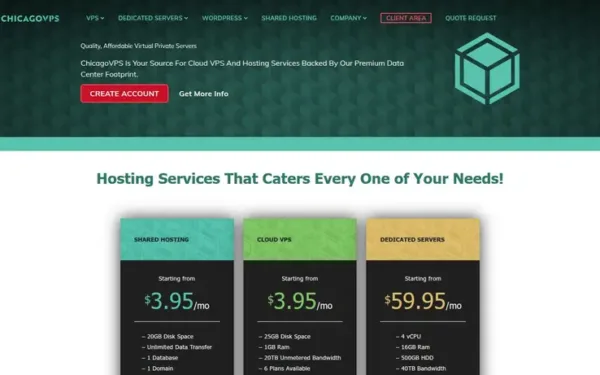
One of the most challenging aspects of choosing a budget hosting provider is dealing with incomplete or unpublished information. In the hosting industry, data gaps are common, particularly regarding hardware specifications, refund policies, and network routing details. When a provider does not publish these details, it introduces a layer of risk that you must actively manage. For instance, ChicagoVPS does not publish a standard refund policy window or a clear starting price for all of its entry-level tiers in its central documentation. This lack of transparency makes it difficult to calculate the total cost of ownership or establish a clear exit strategy if the service fails to meet your performance expectations.
The Risk of Unpublished Terms
When key operational terms are left unpublished, the safer editorial move is to assume the most restrictive scenario. If a provider does not explicitly guarantee a refund window, you should proceed under the assumption that all purchases are final and non-refundable. This is particularly important when evaluating ChicagoVPS, where the lack of a published refund policy means you must be prepared to absorb the cost of the server if it does not perform as needed. To mitigate this risk, it is advisable to start with the smallest possible billing cycle—such as a monthly plan—rather than committing to an annual contract upfront. This limits your financial exposure while you test the network latency and disk performance of the provisioned instance.
In contrast, Hostodo provides a clearly defined, albeit very short, 3-day money-back guarantee. While a three-day window is brief, it at least establishes a formal policy that you can reference if you need to cancel the service. This transparency allows you to plan an intensive testing phase immediately after provisioning the server, ensuring you can verify all critical features before the refund window closes. Managing these data gaps requires a systematic approach to testing and validation, which we will explore throughout this audit.
Establishing an Operational Baseline
To successfully run workloads on budget infrastructure, you must establish an operational baseline immediately after provisioning your server. This involves running independent benchmarks to verify disk I/O speeds, CPU performance, and network throughput. Because budget providers often host multiple virtual machines on a single physical node, performance can vary depending on the activities of your neighbors. By establishing a baseline during the initial deployment phase, you can identify potential hardware bottlenecks early and determine whether the node you have been assigned is capable of handling your production workloads over time.
Furthermore, you must design your application architecture with the assumption that hardware failures or network interruptions can occur. Since unmanaged support does not cover application recovery, implementing external monitoring, automated offsite backups, and failover mechanisms is entirely your responsibility. Relying on a single budget VPS without a robust backup and recovery plan is a high-risk strategy that can lead to permanent data loss or extended downtime. By treating the hosting environment as a raw utility, you can build resilient systems that are not dependent on the provider’s support team for survival.
VPS Performance: Compute Power and Storage Architectures
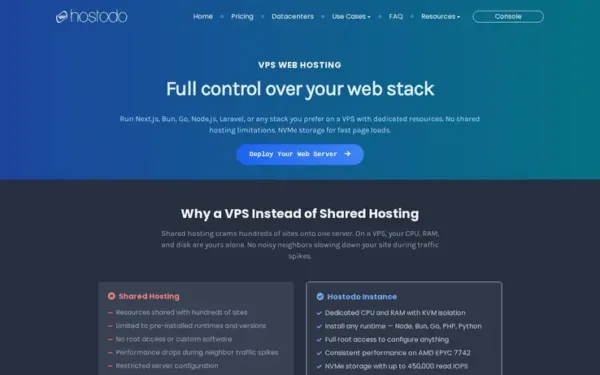
Evaluating performance on budget virtual private servers requires looking closely at the underlying hardware specifications and virtualization technologies. Hostodo builds its platform on modern AMD EPYC processors and pure NVMe SSD storage. AMD EPYC CPUs are known for high core counts and strong multi-threaded performance, making them highly efficient at handling concurrent web requests, database queries, and containerized workloads. The use of NVMe SSDs further enhances this by delivering significantly faster read and write speeds compared to older SATA SSDs or traditional hard drives, reducing disk I/O bottlenecks and speeding up application load times.
ChicagoVPS offers a variety of plans, but because their official documentation lacks detailed hardware specifications for their entry-level tiers, buyers face more uncertainty. While they offer robust bandwidth allocations up to 40TB on dedicated servers, the exact CPU architecture and storage media used on their standard VPS plans are not as clearly defined. This data gap means you must verify the hardware generation with their support team or test it yourself upon deployment. Use the scorecard below to see how these two providers compare across high-level performance indicators based on their published specifications.


When evaluating performance on budget virtual private servers, the storage architecture plays a critical role in determining overall application responsiveness. Hostodo builds its platform on modern AMD EPYC processors and pure NVMe SSD storage, which offers a significant advantage over traditional SATA SSDs or mechanical hard drives. NVMe storage utilizes the PCI Express interface to deliver faster read and write speeds, lower latency, and higher input/output operations per second (IOPS). This means that database-heavy applications, such as content management systems or e-commerce platforms, can execute queries and retrieve data with minimal delay. For developers running concurrent containerized workloads or high-traffic web servers, the combination of AMD’s multi-threaded processing power and NVMe’s rapid data transfer rates reduces the risk of CPU bottlenecks and disk I/O congestion, ensuring a more stable and predictable hosting environment even during peak usage periods.
The performance question is directly tied to how each provider handles disk I/O. In shared hosting or budget VPS nodes, multiple virtual machines often compete for disk access, leading to high latency and slow database queries. Hostodo’s NVMe storage mitigates this by offering multiple queues and faster transfer speeds, ensuring that your database-heavy applications remain responsive even during peak traffic periods. ChicagoVPS’s lack of explicit NVMe guarantees on all tiers means you may experience variable disk performance depending on the node your server occupies. That does not make it bad, but it does mean you should verify the storage type before deploying I/O-intensive workloads.
Disk I/O Bottlenecks in Virtualized Environments
When running database-intensive applications like WordPress, MySQL, or PostgreSQL, disk read and write speeds are often the primary performance bottleneck. If your hosting provider uses older SATA SSDs or mechanical hard drives, your database queries will take longer to execute, leading to slower page load times and a poor user experience. Hostodo’s commitment to pure NVMe SSD storage ensures that your database queries run quickly and file transfers complete without delay, making it a strong candidate for dynamic web applications.
ChicagoVPS’s performance strength lies in its network capacity, particularly on its higher-tier and dedicated plans where bandwidth allocations are generous. However, for standard VPS workloads, the lack of explicit NVMe guarantees on all ChicagoVPS tiers means you may experience variable disk performance. If your application relies on consistent CPU performance or fast disk access, you should run benchmark tests immediately after provisioning a ChicagoVPS instance to verify that the hardware meets your performance requirements before deploying production workloads. The radar chart below provides a visual comparison of their capabilities across key performance dimensions.
Virtualization technology also plays a crucial role in resource isolation and performance stability. Hostodo uses KVM (Kernel-based Virtual Machine) virtualization, which provides full hardware virtualization and ensures that your allocated CPU and RAM are dedicated to your virtual machine. KVM prevents the “noisy neighbor” effect, where other users on the same physical server consume excess resources and degrade your performance. ChicagoVPS also utilizes virtualization to partition their servers, but their support for Windows VPS and cPanel reseller hosting suggests a more diverse hypervisor environment that may include OpenVZ or other container-based virtualization technologies on certain tiers.
Virtualization Layers: KVM vs. Shared Kernels
KVM virtualization is widely considered the industry standard for development environments because it allows you to run your own isolated kernel. This means you can install custom kernel modules, configure advanced firewall rules, and run containerization platforms like Docker without restrictions. Hostodo’s exclusive use of KVM ensures that you have complete control over your operating system environment and that your resources are not shared with other tenants on the host node. I would be careful with container-based virtualization if your application requires strict kernel-level isolation.
In contrast, container-based virtualization like OpenVZ shares the host server’s kernel, which can limit your ability to configure custom network settings or run certain software stacks. While OpenVZ can be highly efficient for basic web hosting, it is more susceptible to resource overselling, which can lead to performance degradation during peak usage hours. If your project requires strict resource isolation and full kernel control, Hostodo’s KVM-based infrastructure provides a more predictable and stable environment. The bar chart below compares the key hardware and network metrics of both providers, illustrating where each brand focuses its performance resources.
Network capacity is another area where the two providers differ. ChicagoVPS offers generous bandwidth allocations up to 40TB on dedicated plans, making it an excellent choice for high-traffic applications, media streaming, or large-scale data transfers. However, their automatic suspension policy for bandwidth overages means you must monitor your usage closely. Hostodo’s bandwidth allocations are standard for the budget tier, but their unmanaged model means you must still manage your traffic usage to avoid potential service interruptions. Use the specs table below to compare the technical baselines of both providers.
Network Capacity and Bandwidth Allocations
When evaluating network performance, you must look at both the port speed and the total monthly bandwidth allocation. A high-speed port (such as 1Gbps or 10Gbps) allows your server to handle large bursts of traffic, but if your monthly bandwidth allocation is low, you can quickly run out of data. ChicagoVPS’s generous bandwidth allocations on dedicated plans provide peace of mind for high-volume projects, but the risk of automatic suspension on their VPS tiers requires careful monitoring.
Hostodo’s network infrastructure is designed to support standard development workloads, offering a dedicated IPv4 address and a /64 IPv6 subnet with every plan. This IPv6 allocation is a significant advantage for developers building modern, IPv6-compatible applications or managing multiple SSL certificates without relying on shared IP addresses. When choosing between the two, consider whether your project requires the massive bandwidth allocations of ChicagoVPS’s dedicated plans or the modern networking features of Hostodo’s KVM VPS tiers. The specs table below outlines these differences in detail.
ChicagoVPS
Hostodo
Top PickIn summary, Hostodo offers a more modern and transparent hardware stack for Linux-based, containerized workloads. ChicagoVPS provides the network scale and environment flexibility needed for Windows and reseller hosting, but introduces more hardware uncertainty on its basic VPS tiers. Before committing to a long-term deployment, consider running your own disk I/O and CPU tests during the initial setup phase to ensure the performance meets your application’s specific demands.
The Financial Equation: Entry Rates vs. Hidden Costs
If the first invoice is still unclear, treat price as a risk conversation rather than a promise. Budget hosting providers often attract customers with low introductory rates, but the true cost of ownership depends on renewal prices, add-on fees, and refund policies. Hostodo offers highly competitive KVM VPS plans starting at $2.99 per month, which represents one of the lowest entry points in the unmanaged KVM market. This low cost is ideal for developers who need a cheap staging environment or a personal development server. However, the pricing question is whether this low entry rate remains sustainable when you factor in renewal costs and potential add-ons like extra IP addresses or storage space.
ChicagoVPS presents a different pricing challenge due to the lack of a published lowest starting price in its central documentation. While they are known for budget-friendly VPS and dedicated server pricing, the absence of transparent starting rates makes it difficult to compare their value proposition directly against Hostodo without initiating a sales inquiry. This lack of transparency increases the initial evaluation effort and introduces uncertainty regarding renewal rates and contract terms. To visualize how these pricing structures compare, review the chart below, which outlines the entry-level value and cost trends of both providers.
Value changes when you look closely at the refund terms and trial windows. Hostodo provides a very short 3-day money-back guarantee, which gives you exactly 72 hours to provision your server, run performance benchmarks, test network latency, and verify application compatibility. If you discover an issue on the fourth day, you are locked into your billing cycle with no recourse for a refund. This narrow window requires you to treat the initial deployment phase as an active, time-sensitive evaluation period. You must be prepared to configure and test the server immediately upon purchase to ensure it meets your requirements before the guarantee expires. I would be careful with any provider that offers such a brief window, as it leaves little room for unexpected delays in your setup process.
Refund Policies and Trial Windows
ChicagoVPS does not publish a standard refund policy window in its official documentation. When a provider does not clearly define its refund terms, you must operate under the assumption that all sales are final. This lack of a published safety net increases the financial risk of testing their platform, especially if you plan to deploy higher-cost dedicated servers or Windows VPS instances. If you deploy a server and experience performance issues or network routing problems, you may not be able to recover your payment, making it critical to resolve any policy questions with their sales team before entering your billing information.
To manage this risk, you should request written confirmation of the refund terms from ChicagoVPS support prior to making a purchase. If they agree to a trial window or a refund policy for your specific order, keep a record of that communication. If they refuse to provide a refund window, you must weigh the cost of the server against the possibility that you may have to write off the expense if the service does not perform as expected. This level of caution is particularly important when dealing with budget providers where billing disputes can be difficult to resolve. The lack of a clear exit path increases your upfront risk, making it essential to start with the smallest possible commitment.
Bandwidth Overages and Suspension Policies
Another critical pricing risk with ChicagoVPS is their policy regarding bandwidth usage. ChicagoVPS offers generous bandwidth allocations up to 40TB on dedicated plans, but their standard VPS tiers enforce strict monthly limits. If your virtual private server exceeds its monthly bandwidth allocation, ChicagoVPS will automatically suspend your service. This automatic suspension can take your application offline without warning, disrupting your business operations and requiring you to pay additional fees or upgrade your plan to restore service. This policy highlights the importance of implementing strict bandwidth monitoring and alerts on your servers.
The financial risk of deploying on budget infrastructure is closely tied to the provider’s billing and suspension policies. ChicagoVPS offers generous bandwidth allocations up to 40TB on dedicated plans, but their standard VPS tiers enforce strict monthly limits. If your virtual private server exceeds its monthly bandwidth allocation, ChicagoVPS will automatically suspend your service, taking your application offline without warning. This automatic suspension policy introduces a significant operational risk for businesses that experience unpredictable traffic spikes or distributed denial-of-service (DDoS) attacks. To mitigate this risk, you must implement external monitoring tools to track your bandwidth consumption and alert you before you approach your monthly limit. In contrast, Hostodo’s bandwidth policies are less restrictive, but because their hosting is strictly unmanaged, you are still responsible for monitoring your own resource usage to avoid potential service interruptions or overage charges.
Hostodo’s bandwidth policies are less restrictive, but because their hosting is strictly unmanaged, you are still responsible for monitoring your own resource usage. If your server experiences a sudden spike in traffic or a denial-of-service attack that consumes your bandwidth, you could face overage charges or temporary suspension. To prevent these unexpected costs, you should implement external monitoring tools that track your bandwidth consumption and alert you before you approach your monthly limit. This proactive monitoring is essential for maintaining application availability on budget infrastructure. Review the pricing cards below to compare the resource allocations and costs of both providers.
- Beginner Shared — $3.95/mo
- Standard Shared — $7.95/mo
- Advanced Shared — $9.95/mo
- WordPress 10GB — $2.95/mo
- WordPress 50GB — $8.95/mo
- WordPress 100GB — $14.95/mo
- Cloud VPS 1GB — $3.95/mo
- Cloud VPS 2GB — $6.95/mo
- Cloud VPS 4GB — $13.95/mo
- Windows VPS Standard — $6.95/mo
- Windows VPS Professional — $9.95/mo
- Cloud Metal 8GB — $20/mo
- Cloud Metal 16GB — $38/mo
- Bare Metal Bronze — $59.95/mo
- Bare Metal Silver — $79.95/mo
- EPYC-1G1C16GN — $20.00/yr
- EPYC-2G1C32GN — $3.50/mo
- EPYC-4G2C64GN — $7.00/mo
- EPYC-8G3C128GN — $9.00/mo
- EPYC-16G6C192GN — $20.00/mo
- EPYC-32G8C288GN — $36.00/mo
- EPYC-24G8C256GN — $26.00/mo
- EPYC-64G12C352GN — $74.00/mo
The pricing question is also shaped by the cost of software licenses. If you choose ChicagoVPS to run reseller hosting, the cost of cPanel licensing will be bundled into your plan or offered as an add-on. Because cPanel has transitioned to a per-account pricing model, these license fees can significantly increase your monthly costs as your client base grows. Hostodo does not offer pre-configured cPanel reseller plans, meaning you must purchase and manage your own control panel licenses if you choose to run one. For users running bare Linux VMs with free control panels like CloudPanel or CyberPanel, Hostodo’s low base price remains highly cost-effective.
Software Licensing and Control Panel Costs
When evaluating the total cost of ownership, you must also consider the cost of operating system licenses. ChicagoVPS offers Windows VPS options, which require a Windows Server license. This licensing cost is typically built into the monthly price of the Windows VPS plan, making it more expensive than a comparable Linux plan. Hostodo does not offer Windows VPS options, focusing exclusively on Linux-based KVM deployments. If your application requires a Windows environment, the licensing costs associated with ChicagoVPS are unavoidable, but they represent a necessary expense for compatibility.
For developers who only need Linux environments, Hostodo’s lack of Windows support is not a drawback, and their low starting price of $2.99 per month remains highly attractive. However, you must still account for the cost of any commercial software, databases, or control panels you plan to install on your virtual machine. Because both providers operate on an unmanaged model, you must handle the installation and licensing of these software components yourself, adding to the overall complexity and cost of your deployment. Review the pros and cons block below for a summary of the financial trade-offs between the two brands.
- Highly budget-friendly VPSand dedicated server pricing
- Generous bandwidth allocations up to 40TB on dedicated plans
- Unmanaged support model covers only hardware and network issues
- No refund policy window published in official documentation
- Extremely budget-friendly KVM VPS plans starting at $2.99 per month
- High-performance AMD EPYC processors and pure NVMe SSD storage
- Strictly unmanaged hosting with no hands-on software support
- Very short 3-day money-back guarantee window
In conclusion, Hostodo provides a more transparent and predictable entry-level pricing model with its $2.99 starting plan and defined 3-day refund window. ChicagoVPS offers competitive pricing for dedicated and Windows environments, but the lack of published refund terms and the risk of automatic bandwidth suspensions require careful contract review. Always read the terms of service carefully and monitor your resource usage closely to avoid unexpected charges on your monthly invoice.
Budget fit, renewal clarity, license exposure, support scope, and migration ownership deserve visible emphasis because those points change the real cost after signup.
The first invoice is where vague hosting comparisons usually become real.
Pricing needs the same kind of realism. The visible monthly number is only one part of the decision because backups, licenses, control panels, migration time, monitoring, management, bandwidth assumptions, storage upgrades, renewal terms, and failed setup time can change total cost quickly. A technically mature buyer may accept those moving parts because internal labor is already available, documentation is normal, and recovery work has an owner. A leaner team should treat every unclear line item as future risk, ask for written confirmation before ranking either provider as the better value, and compare the first invoice against the operating work needed after launch, not just the promotional number that looks best in a table. The useful question is not whether one provider is cheaper for a single month, but whether its full operating model stays affordable after licenses, support expectations, staff time, recovery planning, renewal timing, and incident ownership are included.
Operating Systems, Control Panels, and Developer Tools
Feature availability defines what you can build and how easily you can scale your infrastructure. Hostodo focuses on delivering clean, unmanaged KVM virtual machines equipped with modern development features. Out of the box, Hostodo supports Docker natively, leveraging KVM isolation to ensure that containers run securely without kernel conflicts. They also include a dedicated IPv4 address and a /64 IPv6 subnet with every plan, which is essential for developers building modern, IPv6-compatible applications or managing multiple SSL certificates without relying on shared IP addresses.
ChicagoVPS takes a broader approach to features, catering to users who need specific operating systems or management tools. They offer Windows VPS options with Remote Desktop Protocol (RDP) access, allowing you to run Windows-specific applications, ASP.NET sites, or remote desktop environments. Additionally, ChicagoVPS provides cPanel options for shared and reseller hosting, making it a viable choice for agencies or freelancers who manage client websites and need a structured control panel interface. The comparison block below provides a quick snapshot of how these feature sets align.
The feature set you choose should align with your development workflow and software requirements. Hostodo’s native support for Docker and KVM isolation is a key feature for modern developers. Because KVM provides full virtualization, your virtual machine runs its own isolated kernel. This allows you to run Docker containers, configure custom iptables rules, and install any Linux distribution without worrying about host-level restrictions. The inclusion of a /64 IPv6 subnet also ensures that you have ample IP addresses for container networking and modern web protocols, making Hostodo a highly capable environment for microservices and API development.
Docker Integration and Container Isolation
Running containerized applications requires a virtualization layer that supports independent kernel operations. Hostodo’s KVM virtualization allows you to install Docker and run containers without the kernel compatibility issues that often arise on container-based virtualization platforms like OpenVZ. This makes Hostodo an excellent choice for developers who use Docker for local development and want to deploy their containers to a production environment with minimal configuration changes. The fair caveat is that you must manage the Docker daemon and container security yourself, as Hostodo provides no management tools.
ChicagoVPS’s support for Windows VPS plans with Remote Desktop Protocol (RDP) access targets a different set of requirements. Running a Windows server environment is essential for businesses that rely on proprietary Microsoft software, ASP.NET frameworks, or remote desktop applications. ChicagoVPS handles the licensing and provisioning of these environments, providing a ready-to-use Windows desktop that you can access from anywhere. This is a feature that Hostodo does not offer, as their platform is strictly limited to Linux-based KVM deployments.
IP Allocations and Networking Resources
Another key difference between the two providers is how they handle IP allocations. Hostodo includes a dedicated IPv4 address and a /64 IPv6 subnet with every plan, providing ample IP resources for modern networking needs. This is particularly useful for developers who need to run multiple services on separate IP addresses or test IPv6 routing. ChicagoVPS also provides dedicated IPv4 addresses, but their documentation does not specify the availability of IPv6 subnets on all plans, which may limit your ability to deploy IPv6-only services.
To help visualize the core functional differences, consider the following technical capabilities of each provider:
- Operating System Support: ChicagoVPS supports both Windows Server and Linux distributions, whereas Hostodo is strictly Linux-focused.
- Virtualization Architecture: Hostodo relies exclusively on KVM for strict resource isolation, while ChicagoVPS utilizes KVM alongside other virtualization layers for reseller and Windows configurations.
- IP Allocations: Hostodo includes native /64 IPv6 subnets out of the box, while ChicagoVPS primarily focuses on IPv4 allocations with unspecified IPv6 availability.
Additionally, ChicagoVPS’s cPanel reseller hosting options provide a structured way to manage multiple client accounts. Instead of manually configuring virtual hosts and databases via the command line, you can use cPanel’s graphical interface to automate account creation, billing integration, and resource allocation. This makes ChicagoVPS a much better fit for agencies, web designers, and reseller businesses that need to host client sites efficiently. The feature matrix below compares the specific capabilities of both platforms.
ChicagoVPS
Hostodo
Top PickUltimately, the choice of features comes down to your project’s technical requirements. If you need a raw, high-performance Linux VM with dedicated IPv6 resources for modern development, Hostodo offers the more focused feature set. If you require Windows RDP access, cPanel reseller tools, or massive bandwidth allocations for dedicated servers, ChicagoVPS provides the broader, albeit more traditional, feature catalog. Be sure to verify operating system compatibility and licensing requirements before initiating your deployment.
That distinction becomes more important after launch because tooling, access model, and infrastructure control shape how quickly teams can troubleshoot, expand, or standardize environments across future workloads. Feature depth therefore should be judged by operational fit, not by brochure length alone.
Here is the practical checkpoint I would not skip. Feature lists only matter when they reduce a real operating risk after signup.
- Control: decide whether faster cloud access from ChicagoVPS matters more than deeper infrastructure ownership from Hostodo.
- Visibility: confirm what resource, network, and location details are published before treating either plan as predictable.
- Growth: choose the model that can absorb the next workload without forcing a messy redesign.
- Control: decide whether faster cloud access from ChicagoVPS matters more than deeper infrastructure ownership from Hostodo.
- Visibility: confirm what resource, network, and location details are published before treating either plan as predictable.
- Growth: choose the model that can absorb the next workload without forcing a messy redesign.
- Fallback: know who owns recovery work if provisioning, billing, or management expectations split after launch.
Control Panels and Server Administration
User experience in unmanaged hosting is defined by the speed of provisioning, the control panel interface, and the ease of basic server operations like OS reinstalls and power management. Hostodo features instant provisioning, deploying virtual machines in under 60 seconds. This rapid deployment is a significant benefit for developers who want to spin up an instance, run a quick test, and tear it down without waiting. Their control panel provides the essential tools needed to reboot the server, reinstall the operating system, and manage IP allocations, keeping the administrative overhead to a minimum.
ChicagoVPS also offers instant OS provisioning on its VPS tiers, ensuring that you can get your server up and running quickly. However, because they offer a wider range of services, including Windows VPS and reseller hosting, their administrative interface can be more complex. If you choose a plan with cPanel, you will have access to a familiar graphical interface for managing websites, databases, and email accounts. For unmanaged VPS plans, however, you will still rely primarily on command-line access for server administration. Review the pros and cons block below to see how the user experience compares across both platforms.
- Highly budget-friendly VPSand dedicated server pricing
- Generous bandwidth allocations up to 40TB on dedicated plans
- Unmanaged support model covers only hardware and network issues
- No refund policy window published in official documentation
- Extremely budget-friendly KVM VPS plans starting at $2.99 per month
- High-performance AMD EPYC processors and pure NVMe SSD storage
- Strictly unmanaged hosting with no hands-on software support
- Very short 3-day money-back guarantee window
Which platform asks less from your team?
ChicagoVPS is usually easier to launch when quick provisioning matters, but it still expects customers to manage the stack themselves. Hostodo can demand more planning around hardware and virtualization choices, yet that extra work may be acceptable for teams that already run dedicated infrastructure with repeatable operational playbooks.
The practical ease question is not whether either provider is simple in absolute terms. It is whether your team already has the habits, documentation, and technical ownership needed to operate the environment without creating avoidable support dependency after deployment.
Short version: neither choice should be treated as beginner hosting.
ChicagoVPS is easier when the buyer wants to get a VPS online quickly, make basic stack choices, and keep the deployment moving without waiting on a custom hardware conversation. That does not make it hands-off. It means the friction is more likely to appear after provisioning, when patching, backups, hardening, monitoring, and troubleshooting become the customer’s responsibility. For a small technical team, that can still be acceptable because the work is familiar and repeatable. For a non-technical buyer, the same setup can feel deceptively simple on day one and much harder during the first incident.
Hostodo asks for more planning up front when dedicated control or managed help enters the decision. That extra planning is not automatically a weakness. It can prevent a bad fit if the buyer needs clearer ownership around hardware, virtualization, support boundaries, or a future managed-service path. The safer move is to decide who will operate the server six months from now, not only who can provision it today.
There is also a workflow difference that matters after launch. Teams that already maintain servers may prefer a route where provisioning is quick, access is direct, and responsibility is clearly theirs. Teams that need more guardrails may prefer a slower buying process if it creates better support expectations and fewer surprises later. Neither preference is wrong. The important part is matching the provider to the team that will answer the alert at midnight, renew the service next quarter, and explain the cost when the project grows beyond its first estimate.
Support Boundaries and Escalation Paths
Support matters most when ownership gets blurry: hardware, platform, OS, control panel, and app layers do not fail in neat boxes. In an unmanaged hosting environment, understanding the exact boundaries of your provider’s support model is critical to preventing extended downtime. ChicagoVPS operates under an unmanaged support model that covers only hardware and network issues. If a physical drive fails or the datacenter experiences a network outage, their team will intervene. However, if your operating system fails to boot after an update, or if your web server configuration corrupts, ChicagoVPS support will not assist you with troubleshooting or repairs.
Hostodo takes an even stricter approach to support. They offer strictly unmanaged hosting with no hands-on software support of any kind. Furthermore, Hostodo does not provide a phone support channel, meaning all communication must go through their ticket system. If your server goes offline, you cannot call a technician for immediate troubleshooting; you must submit a ticket and wait for a response. This makes Hostodo best suited for experienced administrators who can diagnose and resolve operating system and application errors independently. The pros and cons block below details the support limitations of both brands.
- Highly budget-friendly VPSand dedicated server pricing
- Generous bandwidth allocations up to 40TB on dedicated plans
- Unmanaged support model covers only hardware and network issues
- No refund policy window published in official documentation
- Extremely budget-friendly KVM VPS plans starting at $2.99 per month
- High-performance AMD EPYC processors and pure NVMe SSD storage
- Strictly unmanaged hosting with no hands-on software support
- Very short 3-day money-back guarantee window
The boundary between hardware and software support is a common source of frustration for budget hosting customers. If your server becomes unreachable, the first step is determining whether the issue is caused by a network outage or a software misconfiguration. With both ChicagoVPS and Hostodo, if the physical host node is online and the network path is clear, the provider’s responsibility ends. If your firewall configuration is blocking incoming traffic or a database service has crashed, you must identify and resolve the issue yourself. I would be careful with relying on support for anything beyond basic infrastructure availability.
Ticket-Only Systems and Response Latency
Hostodo’s reliance on a ticket-only support system means that all communication is asynchronous. If your server experiences an outage, you cannot call a support line to get an immediate status update or request urgent assistance. You must open a ticket through their portal and wait for a technician to review it. While ticket systems are standard in the budget hosting industry, the lack of a real-time communication channel like phone or live chat increases the risk of extended downtime during critical incidents. The fair caveat is that response times can vary depending on ticket volume.
ChicagoVPS also relies primarily on ticket-based support for its VPS and dedicated server plans. While they offer managed support options on their shared and reseller tiers, their standard unmanaged plans do not include phone support. This makes it essential to design your applications with redundancy and failover mechanisms, ensuring that a single server failure does not disrupt your business operations while you wait for a ticket response. The decision summary below outlines the support availability and escalation paths for both providers.
In summary, both providers expect you to act as your own system administrator. ChicagoVPS provides a slightly broader safety net if you use their managed shared or reseller hosting, but their VPS plans remain strictly limited to hardware and network support. Hostodo’s lack of phone support and strict unmanaged policy mean you must be fully comfortable managing servers via the command line and troubleshooting network configurations independently. If you do not have these skills, you should factor in the cost of hiring an external administrator or choose a fully managed hosting provider.
The final operational question is not which brand has the nicer claim, but which one leaves fewer unowned tasks after purchase. With ChicagoVPS, buyers should be comfortable taking responsibility for the stack, documenting recovery steps, and deciding how much unmanaged work their team can absorb. With Hostodo, buyers should press for clarity on what management includes, where dedicated-resource responsibility begins, and how support treats mixed problems that involve hardware, virtualization, network routing, and customer configuration at the same time. That slower reading produces a more useful comparison than a simple winner label because it connects the hosting choice to real workload ownership.
- Escalation: ask which incidents qualify for urgent handling.
- Management: separate infrastructure help from operating-system or application help.
- Migration: confirm whether setup help is included, paid, or unavailable.
- Evidence: keep written answers before treating support claims as equal.
Support should be judged as an operating model, not a slogan. A buyer needs to know whether the provider handles only network and hardware incidents, whether operating-system help is included, whether paid management changes the escalation path, whether urgent tickets receive a different route from routine configuration questions, and whether migration help covers only handoff or real troubleshooting. That matters most when a site fails in a messy way, because the root cause may sit between infrastructure, virtualization, control panel behavior, DNS, billing ownership, and application code. Without that clarity, both providers can look safer on paper than they feel during an outage, and the buyer only discovers the real boundary when revenue, reputation, or internal time is already under pressure. A strong comparison therefore has to ask how each provider behaves after provisioning, not only how clear the sales page looks before checkout. The safer choice is the one whose support boundary your team can explain before the first emergency, renewals, or migration handoff force the issue.
Third-party review evidence should not outweigh official plan data, but it can reveal where buyer expectations need extra checking.
Hostodo user review: Great value VPS provider, i’ve almost had no issues during 3 years partnership.
Matching Infrastructure to Your Workload
Pick the provider whose trade-off you can live with six months after deployment, not the one with the easier headline. ChicagoVPS and Hostodo both offer highly affordable virtual private servers, but they serve different technical audiences and project requirements. ChicagoVPS is the better choice if you require a wider selection of US datacenter locations, need to run Windows VPS environments with RDP access, or want to manage client sites using cPanel reseller hosting. Their generous bandwidth allocations on dedicated plans are highly beneficial, provided you actively monitor your usage to avoid automatic suspensions.
Hostodo is the preferred option if you prioritize modern hardware performance and KVM isolation on a tight budget. With plans starting at $2.99 per month, AMD EPYC processors, NVMe SSD storage, and native Docker support, Hostodo delivers excellent raw computing power for Linux-based development and containerized applications. However, you must be comfortable with their strictly unmanaged support model, 3-day refund window, and lack of phone support. The use-case matrix below maps out which provider is best suited for specific deployment scenarios.
That is why final selection should map directly to workload behavior rather than generic hosting preferences. If you expect fast iteration, lighter provisioning friction, and platform-assisted recovery to matter more than deterministic hardware ownership, ChicagoVPS stays easier to defend. If your priority is steadier dedicated performance, fuller virtualization control, and a cleaner separation from shared-tenancy behavior, Hostodo keeps the stronger long-term argument.
Before finalizing your choice, consider the long-term operational impact of each platform’s limitations. If you choose Hostodo, ensure your team has the skills to manage the OS and applications without support intervention. If you choose ChicagoVPS, verify their refund policies and monitor your bandwidth usage to prevent unexpected suspensions. Both hosts offer excellent value, but only if their operational models align with your technical capabilities.
- Pick ChicagoVPS: when quick VPS rollout and lighter platform friction matter most.
- Pick Hostodo: when dedicated control, isolation, or managed-service options carry more value.
- Pause: when pricing, support scope, or migration responsibility is still unclear in writing.
- Pick ChicagoVPS: when quick VPS rollout and lighter platform friction matter most.
- Pick Hostodo: when dedicated control, isolation, or managed-service options carry more value.
- Pause: when pricing, support scope, or migration responsibility is still unclear in writing.
- Recheck: when third-party review signals and official plan claims point in different directions.
Common Buyer Questions Before Choosing
Before picking a winner, most buyers still want a cleaner answer on whether ChicagoVPS or Hostodo offers managed support options, what happens if they exceed their monthly bandwidth limit on ChicagoVPS, or if they can run Windows on these virtual private servers. Those questions matter because this decision is less about marketing language and more about which platform creates fewer operational compromises after deployment. In the budget hosting tier, understanding these details beforehand prevents unexpected downtime and billing surprises.
Use the FAQ below as a final decision filter. It helps confirm whether cloud flexibility, bare-metal consistency, management expectations, and cost visibility line up with the kind of workload you actually need to support over time. These answers are based on the documented policies and infrastructure specifications of both providers.
What does this compare focus on?
This compare tracks current review scores, filtered plan pricing, product features, support signals, and buyer-fit guidance for ChicagoVPS and Hostodo.
Which brand is cheaper at entry level: ChicagoVPS or Hostodo?
ChicagoVPS starts from $2.95/mo, while Hostodo starts from $3.50/mo. Cheapest option depends on currently matched plans, not brand name alone.
Who should choose ChicagoVPS?
ChicagoVPS makes more sense for buyers who prioritize Highly budget-friendly VPSand dedicated server pricing and whose shortlist still matches available plans in this compare.
Who should choose Hostodo?
Hostodo is better fit for buyers who value Extremely budget-friendly KVM VPS plans starting at $2.99 per month and want alternative trade-offs against ChicagoVPS.
Why is Hostodo current winner in this compare?
Hostodo leads because active compare builder rules currently score it higher across selected criteria. Final decision should still confirm budget, plan fit, and support expectations.
Read those answers as a last-pass filter before purchase, not as marketing reassurance. They work best when you compare operational fit, support expectations, and cost visibility against the exact workloads you plan to place on the platform during the first months after deployment.