


Game Hosting Fit, Speed, and Control
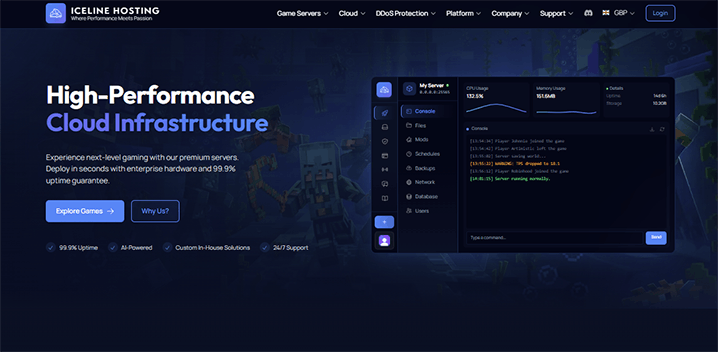
If you run a Minecraft world, a Garry’s Mod community, or a small game network that needs to go live without drama, the first question is not “What is the cheapest host?” It is “Will this stay playable when people actually show up?” That is the right way to read the Iceline-Hosting review. The brand is built around game workloads, instant setup, DDoS protection, 24/7 support, and a wider platform that also includes cloud, reseller VPS, protection tools, and a control-panel stack. That mix matters because game hosting is rarely just about storage or CPU. It is about launch speed, protection, and the ability to keep a community online when the server is under pressure.
The short version: Iceline-Hosting looks most convincing for buyers who want a game-first platform rather than a generic host that happens to mention games once. The published lineup covers Minecraft, S&Box, Hytale, Garry’s Mod, Virtual Dedicated Servers, Reseller VPS, Cloud Solutions, Game Tunnel, and Game Panel. That gives you a real ladder if you start with a small server and later need more control. It also means the buying decision is not one-size-fits-all. A new admin looking for a quick launch has a different need from a reseller, and both are different again from a team that wants a protection layer in front of game traffic.
The catch is just as important. Some of the details that serious buyers usually want before checkout are not published in the supplied site text. A money-back window is not stated. Deep hardware specs are sparse for most plans. So this review is not a fantasy cheerleader piece. It is a buyer guide that says where the brand feels strong, where it feels practical, and where you still need to ask a question before paying.
That is why the next sections focus on fit, day-to-day feel, and the decision boundary. If you are deciding whether to buy, you probably care about three things: whether the plans suit your workload, whether the platform feels easy enough to run, and whether the price still makes sense once you stop looking only at the headline number. Those are the questions that matter here.
Why Iceline-Hosting Fits Game Buyers
Game buyers do not usually shop like enterprise buyers. They are trying to launch something people can actually join. A server can look fine on a product page and still fail the real test if it is hard to start, hard to protect, or hard to expand later. That is why Iceline-Hosting makes sense as a shortlist candidate. It is shaped around game hosting first, then wraps other products around that core. The brand does not feel like it was built for everyone. It feels like it was built for people who care about game traffic, community servers, and the messy reality of keeping a live world online.
The opening attraction is simple: instant setup shows up again and again across the game plans. That sounds small until you remember how often launch day goes sideways. A new Minecraft admin wants to invite friends that evening, not next week. A S&Box group wants to test a build while enthusiasm is still high. A Garry’s Mod community wants a clean restart, not a long ticket chain. Instant setup reduces the friction between buying and actually using the service. That is not a benchmark score, but it is a real buyer benefit.
Protection is the other big reason this brand stands out. The site pushes DDoS-aware products like Game Tunnel, Game Proxy, Shield Panel, and Cloud Solutions with a 99.9% uptime claim. For game hosting, that matters more than a glossy spec sheet. A player does not care whether a host wrote a nice paragraph about infrastructure. They care whether the session stays up when traffic gets ugly. That is why Iceline-Hosting reads as a game-server brand first and a generic hosting brand second.
What this means in practice: if you are shopping for a server that needs to be ready fast, protected by default, and aligned with gaming use cases, this host looks relevant. If you are shopping for a broad shared-hosting catalog, it is the wrong mental model. The catalog and messaging are strongly game-centered. That is a strength for the right buyer, not a weakness.
There is also a useful range in the lineup. The brand does not stop at entry-level game plans. It includes Virtual Dedicated Servers starting from £7.75/mo, Reseller VPS starting from £100.20/mo, Cloud Solutions starting from £43.00/mo, Game Tunnel starting from £16.00/mo, and Game Panel starting from £30.00/mo. That range matters because it gives a buyer room to move. A small community can start with a lower-cost game plan. A more serious operator can move toward cloud or reseller products without changing vendors immediately. A platform with a ladder is easier to trust than a single-product shop.
That said, broad lineup alone does not make a host better. It only makes the fit clearer. The real question is whether the plan family matches the project you actually have. If you only need one world for friends, the low-entry game plans are the obvious place to look. If you are building for clients, the white-label reseller angle is more relevant. If you are worried about traffic attacks, the protection tools deserve a closer look. The point is not that every product matters to every buyer. The point is that the catalog gives you a path.
One other reason this host lands on the shortlist is the way it frames reliability. The cloud line includes a 99.9% uptime claim and free migration. That combination is useful because it addresses two buyer worries at once: staying online and getting moved without a mess. Free migration does not solve every switch pain, but it lowers the barrier for buyers who already have a server elsewhere and do not want the transition to become a weekend project. Less migration pain, less excuse to delay.
The audience fit is fairly clean. This host looks strongest for Minecraft admins, community server operators, buyers who want DDoS-aware hosting, and anyone who likes the idea of one platform for hosting plus protection. The weaker fit is just as obvious: buyers who need a large amount of published operational detail before they commit. That group tends to want datacenter locations, deeper SLA terms, and more plan specs than this site openly lists. If that is you, keep reading, but keep your caution switched on.
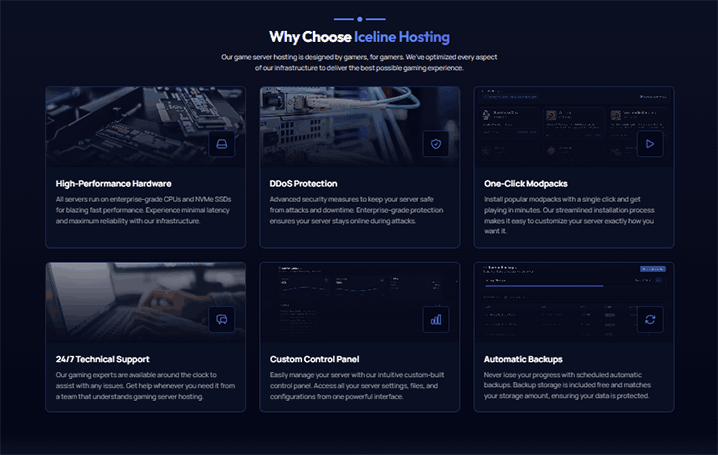
Another practical point: the game pages make the product feel specific instead of vague. Minecraft mentions mod and plugin support plus automatic backups. S&Box highlights workshop support and package support. Hytale points to room to scale and easy backups. Garry’s Mod calls out addon-friendly storage and busy community use. Those details matter because they map to actual friction. Mods break. Backups save time. Addons can become a mess. Scale matters when a small community turns into a real one. The brand seems to understand those problems, and that gives the product story credibility.
There is also a platform-angle buyer here. Game Panel combines a control panel, DDoS dashboard, and apps in one place. Shield Panel adds real-time attack monitoring, filter configuration, and geographic controls. AI Assistant beta lets users manage game servers and DDoS protection using natural language. Those tools are not a reason to buy on their own, but they do show that the brand is trying to reduce operational friction. That is helpful if you are the person who gets dragged into troubleshooting every time a server behaves badly. Less hunting, more fixing.
For a quick shortlist, the best-fit use cases are clear: a Minecraft admin who wants a quick launch and backups; a game community that wants protection in the background; a reseller who needs a white-label control panel; or a buyer who wants cloud infrastructure with a 99.9% uptime claim and migration help. If that sounds like your job, Iceline-Hosting is not random. It is targeted. If your project is broader, slower-moving, or heavily compliance-driven, the missing detail on locations and refund terms becomes more important.
What The Platform Feels Like Day To Day
The real test of a host is not the product page. It is the first normal week after purchase. Can you get in, make changes, understand the controls, and avoid unnecessary panic? Iceline-Hosting seems designed to reduce that first-week friction. The repeated promise of instant setup is the clearest signal. So is the way the brand keeps pairing hosting with support, backups, and panel tools. That combination suggests a service that wants the buyer to feel active quickly rather than trapped in setup limbo.
For a new buyer, the emotional moment is usually simple: you place the order, then you start wondering whether you just created work for yourself. That is where instant setup helps. It shortens the gap between payment and outcome. If you are launching a game server for friends, that gap matters because enthusiasm cools fast. If you are opening a community world, speed matters because the first day is often the easiest day to get people in. If you are testing a new idea, speed matters because you want evidence, not waiting.
The game plans reinforce that feeling. Minecraft mentions automatic backups. S&Box and Hytale also reference easy backup behavior or launch-friendly features. Garry’s Mod emphasizes addon-friendly storage and a panel built for busy community servers. Those are not just cute bullets. They tell you the host is trying to reduce operational footguns. Backups lower the fear of mistakes. Mod support lowers the fear of compatibility problems. Addon-friendly storage lowers the fear of a cluttered community setup. Less chaos, more control.
That is what ease looks like here: not a perfectly documented enterprise console, but a product family that tries to make game administration feel manageable. A buyer who expects a giant, generic control suite may want more documentation. A buyer who mainly wants to launch a server and keep it under control will probably find this approach practical.
The platform story also matters because it gives you more than one place to work. The site describes Game Panel as a one-platform setup for the control panel, DDoS dashboard, and apps. Shield Panel is a separate protection dashboard with real-time attack monitoring, filter configuration, and geographic controls. The desktop angle adds a Windows app with one-window access, taskbar pinning, and no browser clutter for customers. That matters more than it sounds. Every extra browser tab becomes another small annoyance. A cleaner operator loop feels better when you are checking status, making changes, and getting back to work.
That said, the platform still has blind spots from a buying perspective. The site does not publish rich plan specs for most products. You do not get a detailed, easy-to-compare matrix for RAM, CPU, storage, and bandwidth across everything. That is a real limitation if you like to compare hosts line by line before buying. It also means the platform is easier to start than it is to analyze. Those are different strengths. Do not confuse them.
Support sits inside this day-to-day experience too. The site states 24/7 support, and the product descriptions repeat that promise. For a game host, that matters because problems rarely happen on your schedule. A player can report a crash at midnight. A mod can misbehave right before an event. A server can get hit while everyone is online. Knowing support exists around the clock is a useful reassurance. But the specific support channels are not fully published. There is a contact page, but no clear public breakdown of live chat, phone, or ticketing. So the comfort is real, while the operational detail is incomplete.
The platform also feels like it is trying to reduce the support burden through design. AI Assistant beta lets users manage game servers and DDoS protection using natural language. That may not be a deciding feature for most buyers, but it is a clue about direction. The brand wants simpler actions, not more layers. For a stressed admin, that is a good impulse. Still, beta tools should be treated as bonus value, not a core purchase reason. Helpful? Yes. Essential? No.
Cloud buyers get a different day-to-day feel. Cloud Solutions include a 99.9% uptime claim and free migration. That sounds like a buyer who wants a more stable, less hand-holding-intensive setup. The practical reading is straightforward: if your use case has outgrown basic game hosting, this line gives you an upgrade path without needing to leave the brand. That matters for long-term convenience. Re-shopping every time you grow is expensive in time and attention.
The reseller path is the most business-like part of the catalog. Reseller VPS includes a white-label control panel and multiple VPS management. That is aimed at someone who is not just running a server for self-use. It is for someone who wants to present a service to clients. The appeal is obvious: fewer tool switches, more brand control. The trade-off is also obvious: this is a more expensive, more specialized product, and it belongs in a more deliberate buying process. It is not a casual first-click purchase.
Another useful day-to-day detail is that the brand keeps the plan family tied to real use cases instead of abstract tiers. Minecraft is for communities. S&Box is for Source 2 sandbox servers and workshop/package support. Hytale is for launchable worlds and modded experiences. Garry’s Mod is for TTT, DarkRP, Prop Hunt, and related community setups. This is the opposite of vague hosting language. It helps a buyer imagine the actual working environment. That kind of clarity lowers decision fatigue.
If you are sensitive to hidden friction, though, the buying process still needs caution. Starting prices are visible, but renewal pricing is not published. Setup fees are not published. That means you can understand the opening offer better than the long-term cost. A host can feel easy on day one and still leave you guessing later. That is the point where a buyer needs discipline. Do not let a simple launch story distract you from the ongoing bill story.
There is also an important emotional split between confidence and certainty. Iceline-Hosting gives enough signals to feel confident for game hosting. It does not give enough detail to feel fully certain about every operational variable. That distinction matters. Confidence says “this probably fits.” Certainty says “I know exactly what I am buying.” The brand sits closer to the first than the second.
For a buyer who values speed, stability language, and game-specific tooling, that is still a good place to land. For a buyer who wants a fully documented infrastructure contract before paying, it is not enough. That is why the platform feels strongest when you treat it as a specialist game host with growth options, not as a universal hosting marketplace.
When To Choose Another Host Instead
The honest part of any review is the exit path. Not every strong-looking host is the right host for every buyer. Iceline-Hosting has a clear identity, and identities come with limits. If your needs align with game hosting, DDoS-aware setup, and quick launch, the brand is attractive. If your needs are broader or more compliance-sensitive, you should slow down.
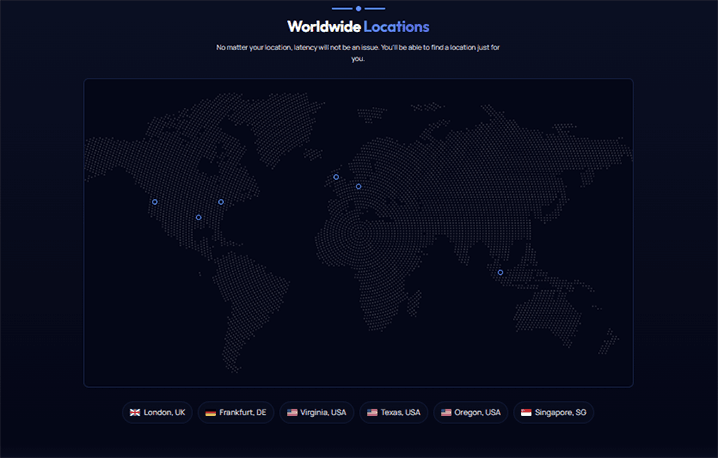
The biggest reason to look elsewhere is the missing operational detail. Data centers are commonly located in several regions. That matters if you care about latency planning, regional routing, legal constraints, or simply knowing where your service is physically hosted. Some buyers can live without that detail. Others cannot. If location is a must-have item in your checklist, this is not the easiest purchase to make.
The second reason is the refund story. A money-back window is not clearly stated. The site does mention a 99.9% uptime guarantee on the cloud side and a deploy-in-seconds style promise, but that is not the same thing as a published refund term. If you like to buy with a safety net, this gap is worth treating seriously. Risk is fine only when it is visible. If the refund window is part of how you decide, ask before you buy.
That does not make the host bad. It makes the host incomplete for a certain kind of buyer. Some customers want to weigh first-month cost, renewal cost, geography, and exit terms before they commit. Iceline-Hosting gives a decent amount of product intent, but not the full paperwork-style clarity that cautious shoppers often want.
The catalog focus is another boundary. This is a game-first brand. The supported and featured use cases revolve around Minecraft, S&Box, Hytale, Garry’s Mod, game protection, panel tools, and cloud or reseller products that still point back toward gaming or adjacent infrastructure. If you are looking for a broad personal website host, a standard shared hosting bundle, or a general-purpose small-business setup, this is probably not the natural fit. A specialized host can be excellent and still be wrong for a non-specialized job.
There is also a transparency gap in the published specs. For many products, you do not get the full RAM, CPU, storage, and bandwidth comparison that would let you line up every plan with confidence. The store gives enough to understand the family and the starting price, but not enough to do a deep hardware audit. If that level of detail matters to you, then this host asks for a leap of faith you may not want to take.
Support is good enough to reassure, but not fully mapped. The site states 24/7 support and a contact page. It does not clearly publish live chat, phone support, or the exact ticket structure. If you are running a high-stakes service and want a specific escalation path, that missing detail matters. A support promise without channel clarity is better than nothing, but not ideal for every operator.
There is a simpler way to say all of this: buy Iceline-Hosting if your priorities are speed, protection, and game-fit. Do not buy it if your priorities are public location data, published refund terms, and deeply documented plan specs. That is the line. The brand looks strongest when the buyer values practical launch help more than exhaustive pre-purchase transparency.
That said, the price ladder still works in its favor. The lowest published game entry points are £4.90/mo for Minecraft, S&Box, and Hytale, with Garry’s Mod at £9.30/mo. Those are approachable starts for game buyers. The more specialized products rise in price as you move into protection, cloud, and reseller territory. That progression makes sense. It also means the host is not pretending to be cheap across the board. It is pricing by use case, which is usually the more honest approach.
The final buyer distinction is this: if your project is alive, social, and game-driven, Iceline-Hosting looks like a sensible shortlist item. If your project is regulated, location-sensitive, or refund-sensitive, the missing details are too important to ignore. In other words, the brand is not bad at being focused. It is only risky when the focus does not match your needs.
So the decision point is clean. Choose Iceline-Hosting if you want a game-centric host with fast launch behavior, obvious protection features, and a platform that can grow with you. Choose another provider if you need full location disclosure, renewal clarity, and a published money-back policy before you commit. That is the right way to read the review, and it keeps the decision honest.